June 10, 2026
Rings - A Complete Guide
Discover the significance and unique characteristics of various ring types, including engagement rings, wedding bands, and cocktail rings, alongside their materials and designs.
Rings for Life's Milestones:
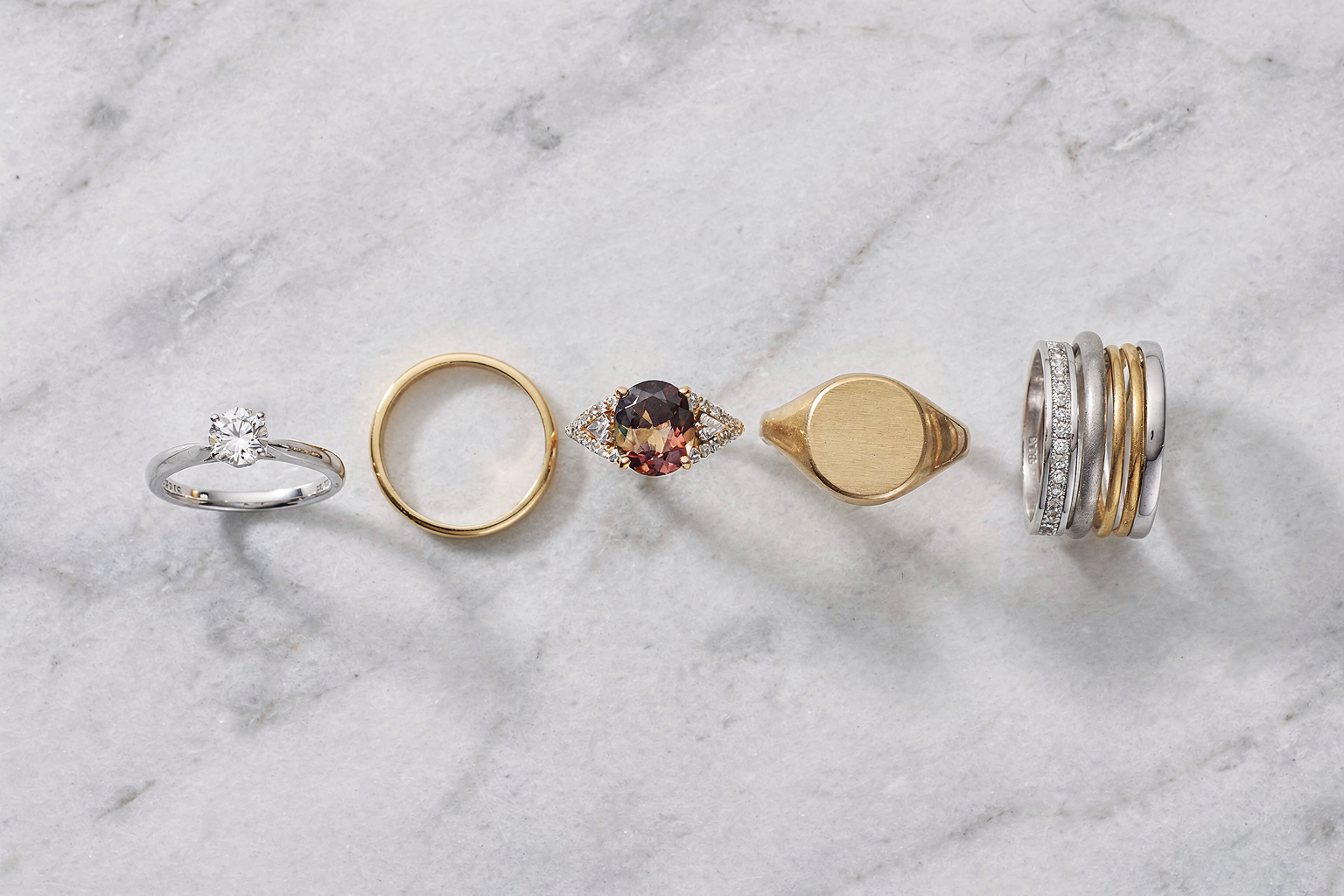
Rings have adorned fingers for centuries, each type carrying its own story and significance. From the quiet promise of an engagement to the bold statement of a cocktail ring, these pieces of jewellery reflect personal milestones, emotional connections, and individual style. Understanding the different types of rings — and what makes each one special — can help you choose a piece that truly resonates.
Engagement Rings
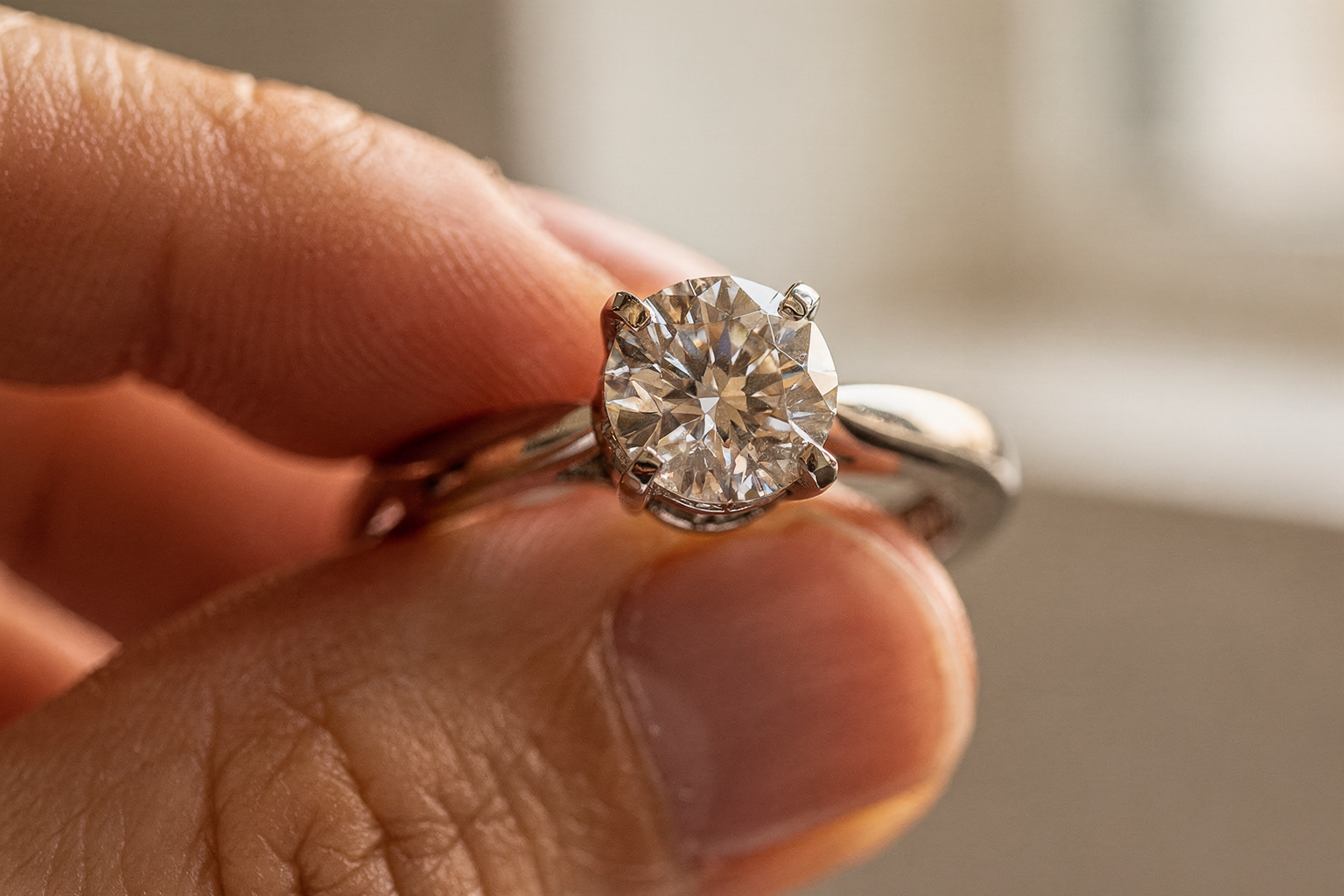
The engagement ring is perhaps the most emotionally charged piece of jewellery a person will ever wear. Traditionally featuring a centre stone, most often a diamond, the engagement ring serves as a visible symbol of commitment and the beginning of a shared life.
Materials
- Yellow Gold: Warm and timeless, flattering on most skin tones, and the most traditional choice.
- White Gold: Modern and versatile, rhodium plated for a bright white finish.
- Rose Gold: Romantic and contemporary, with a warm blush tone that has surged in popularity.
- Platinum: The most prestigious metal choice — dense, durable, naturally white, and hypoallergenic.
Centre Stone Options
While diamonds remain the classic choice, alternatives are increasingly popular:
- Sapphires: Royal blue or fancy colours, extremely durable for daily wear.
- Rubies: Vivid and passionate, deeply symbolic.
- Emeralds: Rich green, striking and distinctive.
- Moissanite: Near-identical appearance to diamond at a fraction of the cost.
- Lab-grown diamonds: Physically identical to natural diamonds, significantly more affordable, and increasingly preferred by environmentally conscious buyers.
Setting Styles
- Solitaire: Single centre stone, clean and timeless.
- Halo: Centre stone surrounded by smaller diamonds, maximising sparkle.
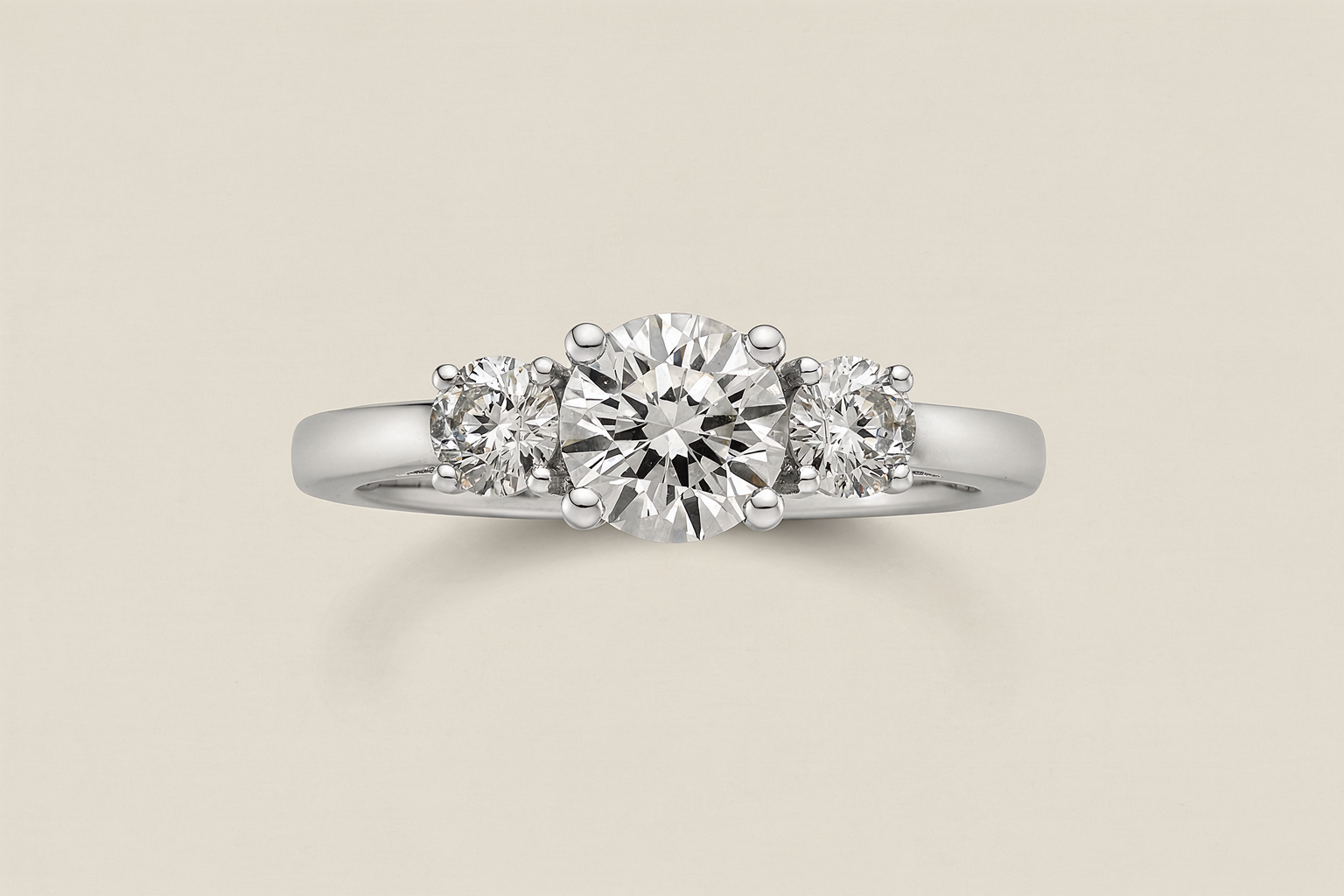
- Three-stone: Past, present, and future — a deeply symbolic choice.
- Hidden halo: A solitaire with a secret ring of diamonds beneath the centre stone.
- Pavé: Band set with small diamonds for continuous sparkle.
Wedding Bands
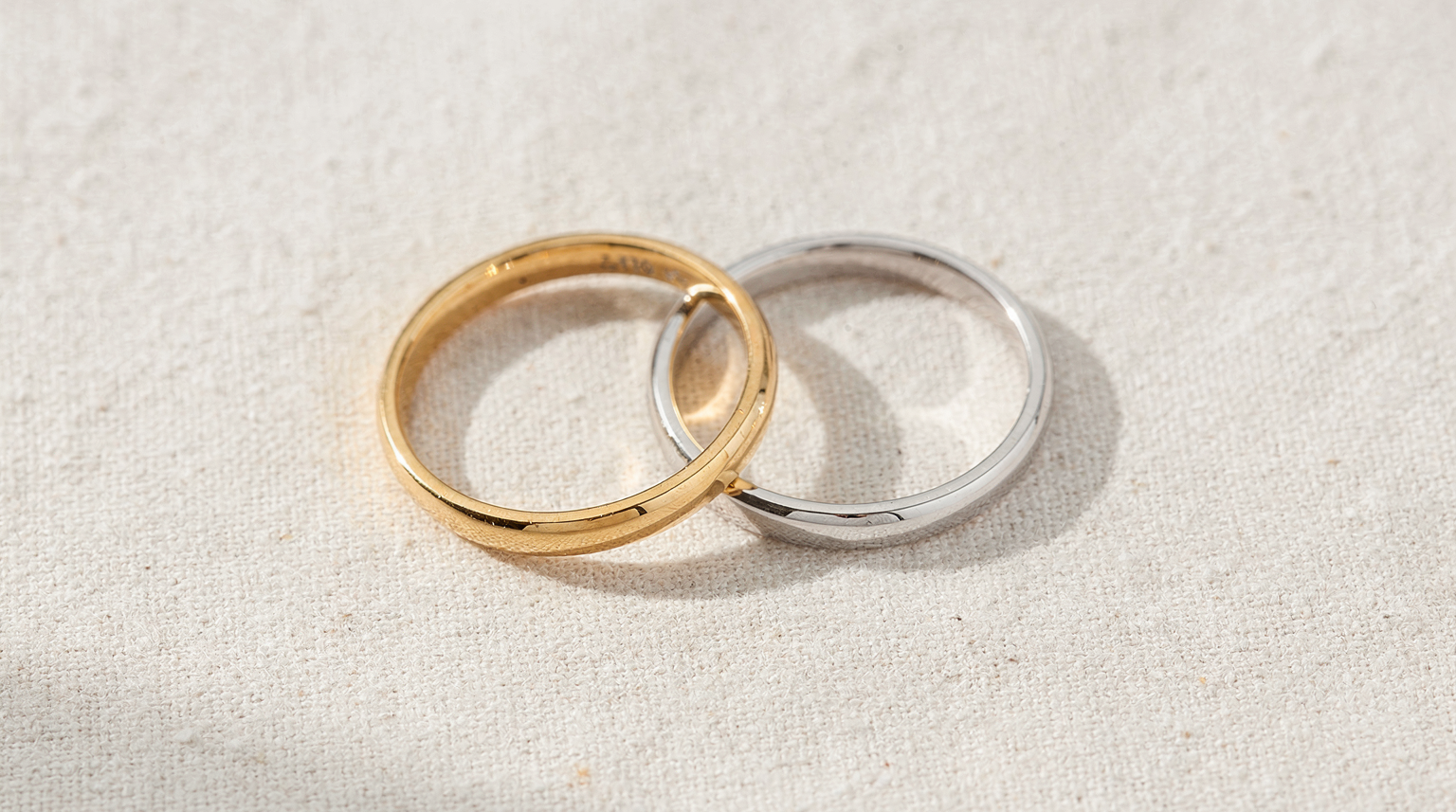
The wedding band is exchanged at the ceremony and worn every day thereafter — a permanent symbol of marriage. Simpler in design than the engagement ring, the wedding band is often chosen to complement or pair with it.
Styles
- Classic plain bands: Unadorned, focused entirely on the purity and quality of the metal. Timeless and understated.
- Diamond-set bands: Feature small diamonds in pavé, channel, or bezel settings, adding sparkle and elegance.
- Eternity bands: Diamonds or gemstones set all the way around the band — a powerful symbol of never-ending love.
- Half-eternity bands: Stones set on the top half only, more comfortable for daily wear and easier to resize.
- Contoured or fitted bands: Shaped to sit flush against a specific engagement ring.
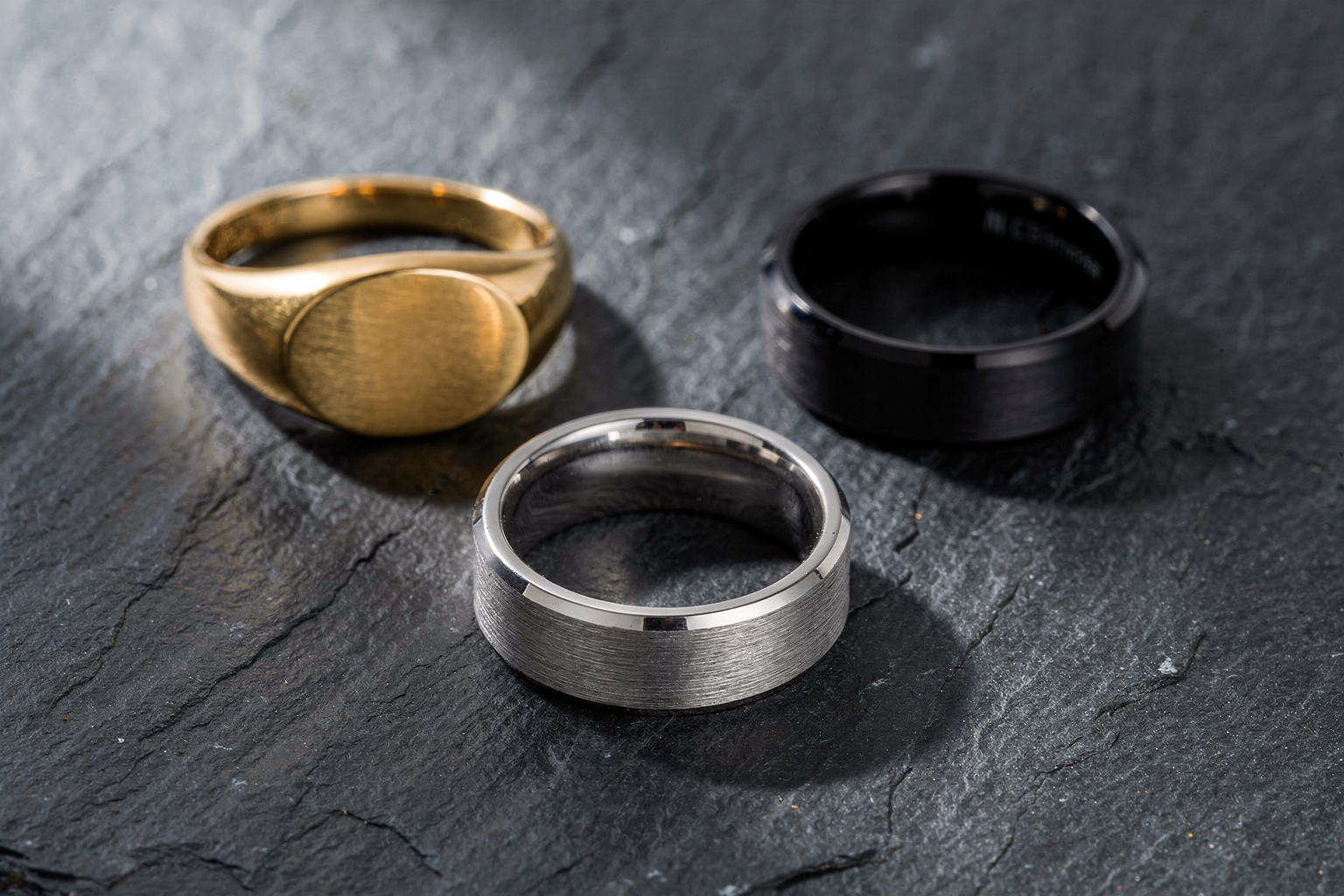
- Men's wedding bands: Typically wider and plainer, available in gold, platinum, titanium, tungsten, and increasingly in two-tone designs.
Pairing Considerations
- Match metals for a seamless look
- Contrast metals deliberately for a modern, fashion-forward pairing
- Consider width — thinner bands suit delicate engagement rings, wider bands suit bold ones
Eternity Bands
Deserving their own category, eternity bands go beyond the wedding context. They are gifted to mark anniversaries, the birth of a child, significant birthdays, or simply as a meaningful self-purchase. A full eternity band features gemstones set continuously around the entire ring. A half-eternity band features stones on the upper half only.
Stone Options
- White diamonds — classic and versatile
- Fancy coloured diamonds — black, yellow, champagne, pink
- Sapphires, rubies, emeralds — vibrant and increasingly popular
- Mixed stones — alternating colours for a unique look
The Stack
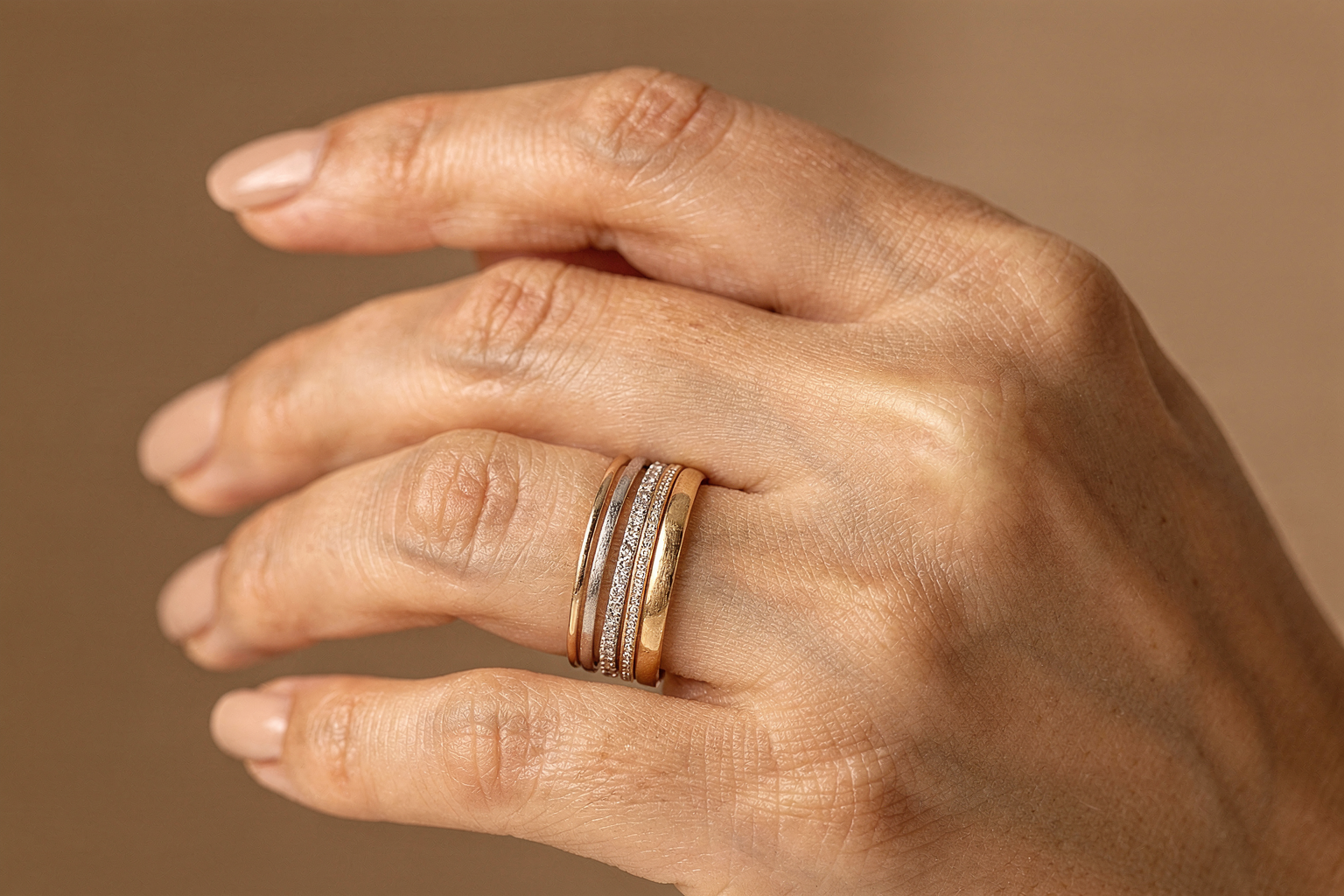
Eternity bands are the foundation of the stacking trend — wearing multiple slim bands together on one finger. Each band can represent a milestone, a year, a memory. The stack grows over time, becoming deeply personal.
Anniversary Rings
Similar to eternity bands but distinct in purpose, anniversary rings are gifted to mark years of marriage — most commonly the first, fifth, tenth, or twenty-fifth anniversary. They are often more elaborate than a wedding band, featuring larger stones or more intricate designs, and are typically worn alongside the existing engagement ring and wedding band.
Promise Rings
A promise ring is given before an engagement, representing a serious commitment between partners who are not yet ready to become engaged. Simpler and more affordable than an engagement ring, promise rings are typically worn on the ring finger of the right hand to avoid confusion. They are particularly popular among younger couples and are often personalised with birthstones or meaningful engravings.
Stackable Rings
Stackable rings are slim, versatile bands designed to be worn in multiples. They can be plain metal, pavé set, or feature small individual stones. The appeal lies in the ability to build a personalised combination over time — mixing metals, stones, and textures to create a look that is entirely unique. Stackable rings work equally well as a fashion statement or as a collection of meaningful pieces accumulated over years.
Signet Rings
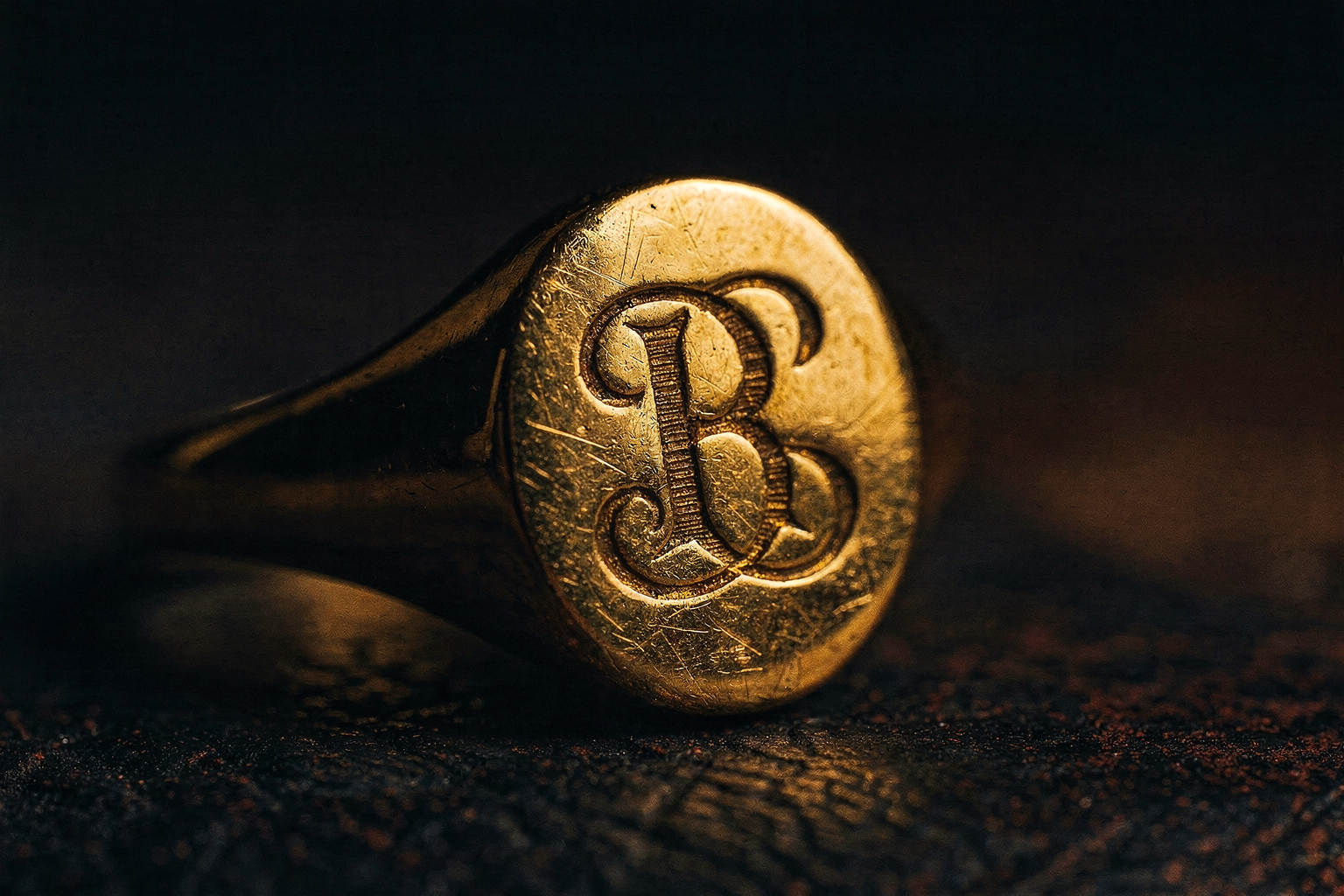
One of the oldest ring styles in history, the signet ring originated as a personal seal used to authenticate documents. Today the signet ring has experienced a major fashion resurgence, worn by both men and women as a bold statement piece. Traditionally featuring a flat oval or rectangular face engraved with a family crest, monogram, or symbol, contemporary signet rings range from faithful heritage reproductions to clean minimalist interpretations. Typically worn on the little finger, signet rings are available in gold, silver, and platinum and make a deeply personal gift.
Cocktail Rings
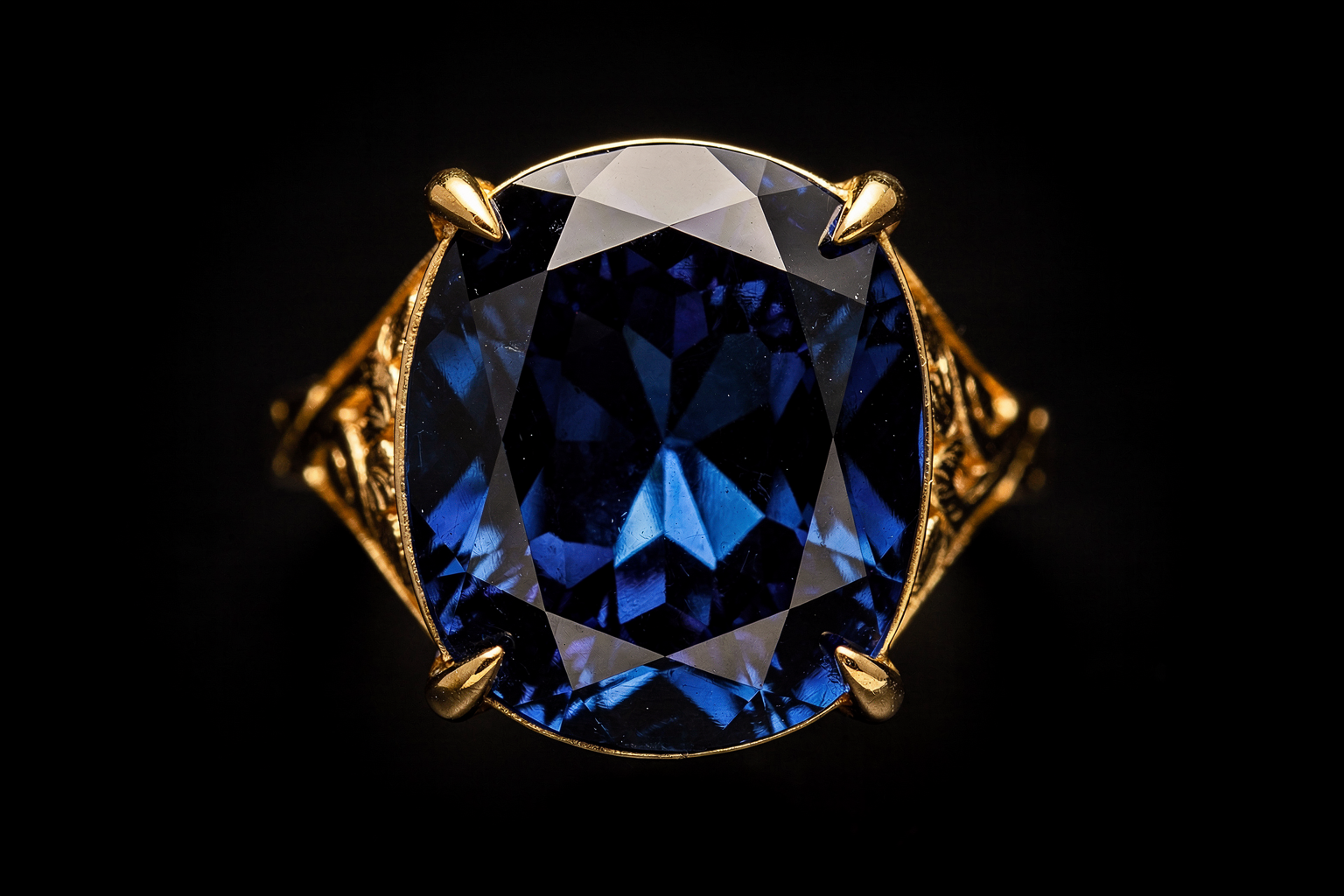
Bold, expressive, and unapologetically dramatic, the cocktail ring is designed to be noticed. Originating in the prohibition era when wearing an ostentatious ring was itself an act of rebellion, cocktail rings today are worn to special occasions, formal events, or simply to elevate an everyday outfit.
Characteristics
- Scale: Significantly larger than other ring types, commanding attention.
- Design: Often asymmetrical, featuring unusual stone cuts, mixed gemstones, or intricate metalwork.
- Stones: Vibrant coloured gemstones are the norm — rubies, sapphires, emeralds, tourmalines, and tanzanites all feature prominently.
- Wearing: Traditionally worn on the right hand, often on the index or middle finger.
Birthstone Rings
Birthstone rings feature the gemstone associated with the wearer's birth month, making them an inherently personal gift. They are among the most popular gifting choices globally, suitable for birthdays, graduations, Mother's Day, and Christmas. Each of the twelve birthstones carries its own symbolism and lore — sapphire for September, ruby for July, emerald for May, and so on. Birthstone rings range from simple solitaire settings to elaborate cocktail-style designs.
Mother's Rings
A mother's ring features the birthstones of her children, arranged in a single band or cluster setting. It is one of the most sentimental ring styles available, representing the family unit in a single piece of jewellery. Typically gifted by children or a partner, mother's rings can be updated over time as families grow.
Right Hand Rings
The right hand ring is simply any ring worn deliberately on the right hand as a fashion or personal statement rather than a symbol of commitment. The concept has been actively championed by major jewellers as a celebration of independence and self-purchase. Right hand rings tend to be bolder, more colourful, and more expressive than their left hand counterparts — essentially a permission to wear exactly what you want without convention.
Men's Rings
Men's rings deserve equal consideration and have expanded far beyond the plain wedding band. Today men wear:
- Wedding bands: Plain, diamond-set, two-tone, or textured.
- Signet rings: A long-standing tradition across many cultures.
- Fashion rings: Bold, architectural designs in gold, silver, or alternative metals.
- Statement rings: Featuring stones, engravings, or mixed materials.
- Alternative metals: Titanium, tungsten, and carbon fibre offer durability and a contemporary aesthetic particularly suited to active lifestyles.
Midi Rings
Worn above the knuckle rather than at the base of the finger, midi rings are a fashion-forward choice that adds visual interest to the hand. Typically slim and simple in design, they work particularly well as part of a layered, stacked look combining multiple rings across different fingers and positions.
Finding Your Ring
Ultimately the right ring is the one that resonates — with who you are, what you want to say, and the moment you want to mark. Whether you are selecting an engagement ring to celebrate a new beginning, building a stack of eternity bands that tells your story over time, or choosing a bold cocktail ring purely for the joy of it, understanding the full landscape of ring types allows you to make a choice with both confidence and meaning.
Should you find that no existing design quite captures what you are looking for, bespoke conversations with a skilled jeweller can open entirely new possibilities — creating a piece that is, in every sense, one of a kind.